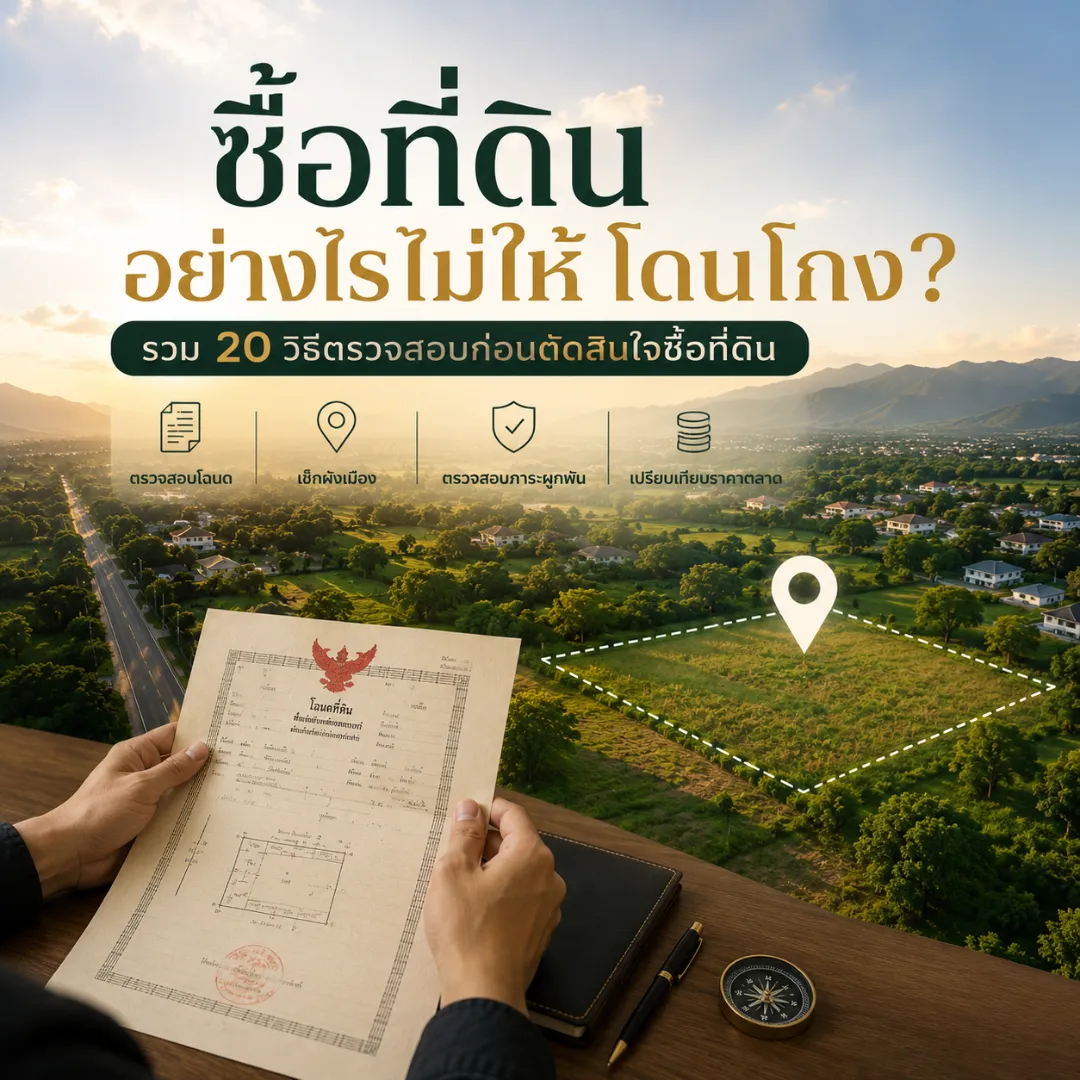
20 Essential Checks Before Purchasing Land
Buying land is one of the biggest financial decisions you will ever make. Whether you're planning to build a home, invest for long-term appreciation, develop a commercial project, or purchase farmland, conducting thorough due diligence is the key to protecting your investment and avoiding costly mistakes.
Why Land Verification Matters
A beautiful location and an attractive price can easily convince buyers to make a quick decision. However, purchasing land without proper verification may result in unexpected legal or financial issues.
Some of the most common risks include:
Buying land with an outstanding mortgage
Ownership disputes
Incorrect land boundaries
Restricted zoning regulations
No legal road access
Inability to transfer ownership
Paying significantly above market value
Taking time to verify every aspect of the property helps minimize these risks and ensures a more confident purchasing decision.
Land Buying Checklist
Before signing any agreement, make sure you verify the following:
✔ Land title deed
✔ Legal ownership
✔ Mortgage or encumbrances
✔ Government appraised value
✔ Zoning regulations
✔ Boundary markers
✔ Road access
✔ Utilities
✔ Flood history
✔ Surrounding environment
20 Essential Checks Before Buying Land
1. Verify the Land Title
The land title is the most important legal document.
Common land documents in Thailand include:
Title Type | Transferable |
|---|---|
Chanote (Nor Sor 4 Jor) | ✔ |
Nor Sor 3 Gor | ✔ |
Nor Sor 3 | ✔ |
Sor Por Kor (Agricultural Reform Land) | ✘ |
Por Bor Tor 5 | ✘ |
For long-term investment, land with a Chanote title is generally considered the safest option because the boundaries have been officially surveyed.
2. Confirm Legal Ownership
Always verify that the seller is the legal owner listed on the title deed.
If the sale is handled by an agent or representative, request proper authorization documents before proceeding.
3. Check for Encumbrances
Visit the local Land Office to determine whether the property has:
Mortgage
Court seizure
Easement
Legal dispute
Third-party rights
Understanding these obligations can help prevent unexpected legal complications.
4. Review Zoning Regulations
Zoning determines how the land may legally be used.
Examples include:
Green Zone – Agriculture
Yellow Zone – Residential
Red Zone – Commercial
Purple Zone – Industrial
If your goal is to build a home or develop a project, zoning compatibility is essential.
5. Visit the Property
Never rely solely on online photographs.
An on-site inspection allows you to evaluate:
Accessibility
Terrain
Elevation
Drainage
Neighborhood
Existing structures
Overall environment
Real conditions often differ significantly from marketing photos.
6. Inspect Boundary Markers
Compare the physical boundary markers with the official survey map.
If uncertainty exists, request a new professional survey before completing the purchase.
7. Confirm Road Access
Some properties have no legal public access.
Verify that:
Public roads exist
Legal right-of-way is available
Vehicles can enter the property comfortably
Road access has a direct impact on future usability and resale value.
8. Check Utility Availability
Utilities significantly increase property value.
Verify the availability of:
Electricity
Water supply
Internet
Drainage
Future installation costs should also be considered.
9. Compare Market Prices
Don't purchase simply because the asking price appears attractive.
Compare with:
Nearby listings
Recent transactions
Government appraised values
Local market trends
A proper comparison helps determine whether the property is fairly priced.
10. Research Future Development
Infrastructure projects often increase surrounding land values.
Look for future developments such as:
Highways
Mass transit systems
Airports
Industrial estates
Commercial centers
Tourism projects
These projects can significantly improve long-term investment potential.
Quick Evaluation Table
Item | Importance |
|---|---|
Title Deed | ⭐⭐⭐⭐⭐ |
Ownership | ⭐⭐⭐⭐⭐ |
Mortgage Status | ⭐⭐⭐⭐⭐ |
Zoning | ⭐⭐⭐⭐ |
Road Access | ⭐⭐⭐⭐⭐ |
Boundaries | ⭐⭐⭐⭐ |
Utilities | ⭐⭐⭐⭐ |
Flood Risk | ⭐⭐⭐ |
Market Value | ⭐⭐⭐⭐ |
Location | ⭐⭐⭐⭐⭐ |
Common Mistakes Buyers Make
Purchasing without checking legal documents
Skipping the site inspection
Ignoring zoning restrictions
Failing to verify land boundaries
Trusting verbal promises only
Paying above market value
Overlooking mortgages or legal disputes
Ignoring future development potential
Conclusion
Buying land is not simply about finding a beautiful location or the lowest price. It is about making a secure investment backed by accurate information, legal verification, and thoughtful planning.
By checking ownership, title deeds, zoning regulations, road access, utilities, and future development opportunities, buyers can greatly reduce risk while maximizing long-term value.
Whether you are searching for residential land, farmland, commercial property, or investment opportunities, LandHubThai helps you discover quality land listings across Thailand with reliable information and a user-friendly search experience.
Frequently Asked Questions
What should I check first before buying land?
Always verify the title deed and legal ownership before reviewing other factors.
Is it safe to buy land online?
Yes, provided that you verify legal documents, inspect the property in person, and complete the ownership transfer through the official Land Office.
What type of land is best for investment?
Properties located near future infrastructure projects, expanding urban areas, industrial zones, or tourist destinations generally offer strong long-term appreciation potential.
Is cheap land always a good investment?
Not necessarily. A lower price may indicate legal issues, poor access, zoning restrictions, or limited development potential. Always perform comprehensive due diligence before purchasing.