Everything You Need to Know Before You Build
Every dream home begins with the perfect piece of land. Choosing the right land is one of the most important decisions in the home-building journey. Beyond the purchase price, factors such as location, zoning, accessibility, utilities, and long-term value all play a vital role in creating a comfortable and worthwhile investment.
Whether you're building your first home, a retirement residence, or a vacation villa, this guide will help you make informed decisions before purchasing land.
Why Choosing the Right Land Matters
Many people spend months selecting house designs but only a few days evaluating the land itself. Unfortunately, poor land selection can lead to expensive problems later.
Common issues include:
Flood-prone locations
Poor road access
Irregular land shapes
High land filling costs
Limited utility services
Zoning restrictions
Unexpected legal complications
Selecting suitable land from the beginning saves both time and money while providing greater peace of mind.
Questions to Ask Before Buying Land
Before searching for properties, define your needs by asking:
What is your total budget?
How much land do you need?
Will you build a single-story or two-story house?
Do you want a garden or swimming pool?
How many family members will live there?
How close should the property be to work or schools?
Do you prefer city living or a quiet countryside lifestyle?
Having clear goals helps narrow your search and ensures the land fits your future lifestyle.
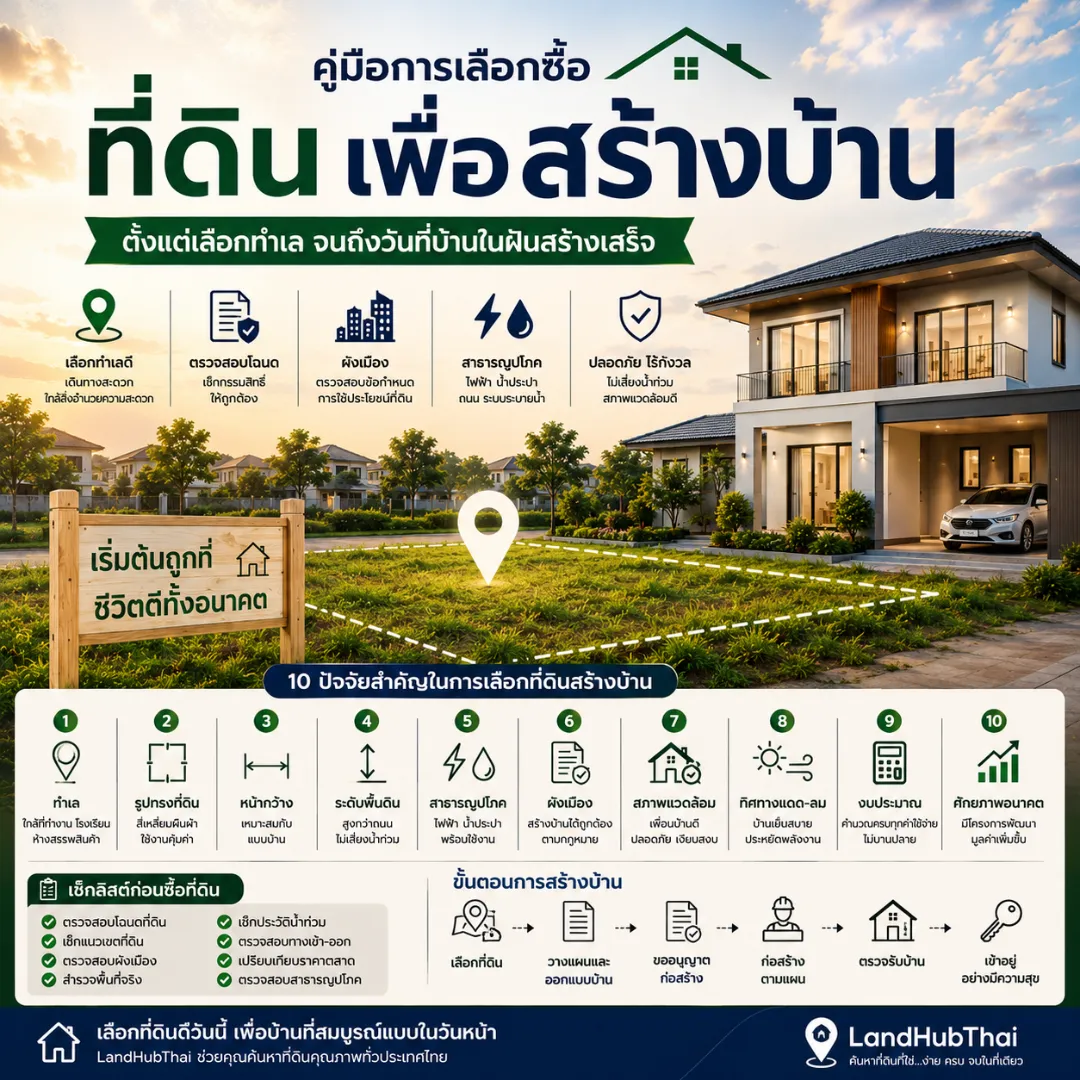
10 Key Factors When Choosing Land
1. Location
Location is always the most important consideration.
Look for areas close to:
Business districts
Schools
Hospitals
Shopping centers
Public transportation
Main roads
Convenient locations improve daily life and increase long-term property value.
2. Land Shape
A regular-shaped plot provides more flexibility for house design.
Recommended shapes include:
Rectangular
Square
Avoid:
Narrow plots
Triangle-shaped land
Flag-shaped plots
Irregular shapes often reduce usable space and increase construction costs.
3. Frontage Width
The width of the land should match your planned house design.
As a general guide:
Standard family homes: 16–20 meters
Luxury homes with gardens: 20+ meters
A wider frontage provides better architectural possibilities.
4. Ground Elevation
Choose land that sits slightly higher than the surrounding roads.
Benefits include:
Reduced flood risk
Better drainage
Lower land filling expenses
Easier landscaping
5. Utilities
Check whether the land has access to:
Electricity
Water supply
Internet connection
Drainage systems
Paved roads
Installing utilities afterward can significantly increase your overall project cost.
6. Zoning Regulations
Always verify local zoning regulations before purchasing.
Important considerations include:
Residential zoning
Building height limitations
Floor Area Ratio (FAR)
Construction setbacks
Future city planning
These regulations determine what can legally be built on the property.
7. Surrounding Environment
Visit the site at different times of the day.
Observe:
Neighborhood quality
Noise levels
Nearby factories
High-voltage power lines
Odors
Traffic conditions
The surrounding environment greatly affects long-term living quality.
8. Sunlight and Wind Direction
Proper orientation improves comfort and reduces energy consumption.
A well-positioned home can benefit from:
Better natural lighting
Cooler indoor temperatures
Improved ventilation
Lower electricity bills
9. Total Budget
Remember that buying land is only part of the investment.
Additional expenses may include:
Land filling
Boundary walls
Driveways
Utility connections
Building permits
Landscaping
Plan your budget carefully to avoid unexpected costs.
10. Future Development Potential
Look for locations benefiting from future infrastructure projects such as:
New highways
MRT or BTS expansions
Shopping malls
International schools
Hospitals
Business districts
These developments often increase land value over time.
Evaluation Checklist
Factor | Importance |
|---|---|
Location | ⭐⭐⭐⭐⭐ |
Land Shape | ⭐⭐⭐⭐ |
Frontage Width | ⭐⭐⭐⭐ |
Zoning | ⭐⭐⭐⭐⭐ |
Utilities | ⭐⭐⭐⭐⭐ |
Flood Risk | ⭐⭐⭐⭐ |
Sun Orientation | ⭐⭐⭐ |
Accessibility | ⭐⭐⭐⭐⭐ |
Budget | ⭐⭐⭐⭐ |
Future Growth | ⭐⭐⭐⭐⭐ |
Before You Buy
✔ Verify the land title.
✔ Confirm legal ownership.
✔ Inspect the property in person.
✔ Review zoning regulations.
✔ Check flood history.
✔ Verify road access.
✔ Compare nearby land prices.
✔ Confirm utility availability.
Common Mistakes Home Buyers Make
Many first-time buyers make these avoidable mistakes:
Buying solely based on price
Ignoring future neighborhood development
Skipping site inspections
Overlooking zoning restrictions
Underestimating land preparation costs
Purchasing land that is too small
Not planning for future family needs
Avoiding these mistakes can save significant money and frustration.
Conclusion
Building your dream home begins long before construction starts—it begins with choosing the right land. A carefully selected property provides a strong foundation for comfortable living, future expansion, and long-term value appreciation.
By considering location, land shape, utilities, legal status, accessibility, and future growth, you can make a confident investment that supports your lifestyle for many years to come.
LandHubThai helps homebuyers discover quality residential land across Thailand through detailed property information, high-quality images, interactive maps, and advanced search tools—making your journey toward building a dream home simpler and more enjoyable.
Frequently Asked Questions
How much land is recommended for a single-family home?
Most family homes require between 200–400 square meters (50–100 square wah), depending on the house size and outdoor space you desire.
What type of land is best for building a house?
A rectangular plot with sufficient road frontage, legal access, utility connections, and residential zoning is generally the best choice.
Should I buy land in a housing development or independent land?
Housing developments offer convenience and ready-to-use infrastructure, while independent land often provides greater flexibility, privacy, and larger lot sizes.
Where can I find quality residential land in Thailand?
LandHubThai provides a comprehensive marketplace featuring verified residential land listings across Thailand, complete with detailed information, maps, photographs, and powerful search tools to help you find the perfect location for your future home.